https://www.nature.com/articles/d41586-026-02981-9
- NEWS
‘Epigenetic’ editing is here: gene-tagging technique banishes hepatitis B virus

Hepatitis B virus can cause acute and chronic infections in the liver. Credit: Linda Stannard, UCT/SPL
A wave of epigenetic therapies is offering hope for new ways to treat chronic hepatitis B — a lingering liver infection that is caused by the hepatitis B virus (HBV) and affects more than 250 million people around the world. Currently available drugs often fail to eradicate the virus from the body.
Gene-editing therapies — which make cuts to DNA strands — have been explored but they can increase cancer risks for people with hepatitis B. Researchers are turning instead to epigenetic editing, which modifies markers attached to the DNA to alter how genes are turned on and off.
Scientists working at the biotechnology firm nChroma Bio in Boston, Massachusetts, and at institutes in Milan, Italy, have now placed chemical tags onto the HBV genome to shut down its gene activity and prevent it from producing viral particles. They achieved promising results in experiments on human liver cells and in mice, and the therapy generated only minimal and temporary side effects when tested in monkeys. The study was published in Nature Biomedical Engineering on 21 September1.
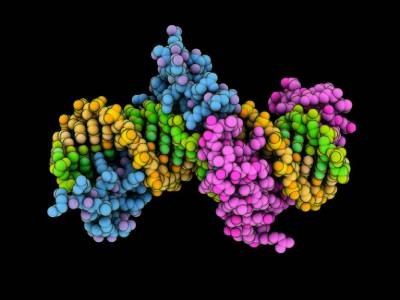
‘Epigenetic’ editing cuts cholesterol in mice
The efficacy of a single injection was “quite impressive”. This “is really where we need to go to end up being able to address this pandemic of HBV around the world”, says John Tavis, a molecular virologist at Saint Louis University in Missouri.
The preclinical findings “supported clinical advancement of this approach”, says study co-author Angelo Lombardo, a molecular biologist at the San Raffaele Telethon Institute for Gene Therapy in Milan, Italy. nChroma Bio has now launched a clinical trial to test multiple doses of the treatment in Hong Kong and New Zealand. The first participant received the therapy, through an intravenous infusion, in January.
The trial in humans is “a huge step” and “a realization of many, many years of work”, adds Lombardo, who co-founded nChroma Bio but does not have an official role at the firm. nChroma Bio declined Nature’s request to comment on the study.
Targeting hidden copies
HBV infections can turn into life-long challenges because the virus has ways to remain in the body and trick the immune system into not fighting against it. One of these is making free-ranging mini-chromosomes that can hide inside liver cells for a long time.
These twists of viral DNA form “a genomic archive of the virus”, which help it to replicate when people stop taking anti-HBV drugs and lead to a severe rebound of the disease, explains virologist and clinical hepatologist Fabien Zoulim at the University of Lyon in France. Less than 10% of people who are treated for HBV for at least ten years can cease their daily medications without such risk, Zoulim adds.
HBV can also stitch pieces of its genome into its host’s DNA and generate proteins that alter the immune response against it. The integration of viral DNA causes molecular changes in liver cells that can lead to cancer, Zoulim says.
nChroma’s therapy — named CRMA-1001 — contains a version of CRISPR’s Cas9 enzyme that lacks its normal enzymatic cutting activity. It also features RNA strands that lead the enzyme to its specific target in the HBV genome.
Encapsulated in a lipid nanoparticle, the therapy pulls a double duty to silence both free-ranging and integrated HBV DNAs by tagging them with methyl groups.
In a mouse model of HBV, in which the animals carry both types of HBV DNA, a single injection of CRMA-1001 reduced the levels of the viral DNA and HBV proteins that indicate the virus’s activity. In 25 of 60 animals that received one or three injections, those levels were undetectable after six months.
The researchers also tested the safety of three monthly infusions of escalating doses of CRMA-1001 on cynomolgus monkeys (Macaca fascicularis). They found that the levels of liver enzymes in the monkeys’ blood increased after the animals received the highest dose, which indicates some stress — but those returned to normal levels within four weeks. The team did not observe any adverse side effects.
The full treatment
nChroma, which plans to expand its trial to the United Kingdom and France, is not the only firm developing epigenetic therapies for chronic hepatitis B. In May, Tune Therapeutics in Seattle, Washington, reported preliminary results from its ongoing, early-stage trial testing different doses of its epigenetic silencer. The firm announced repression for up to 17 months.
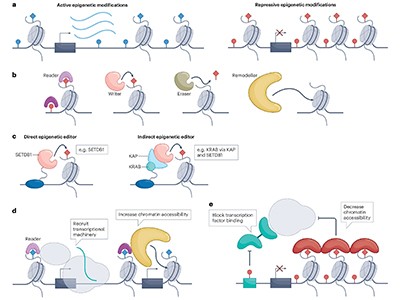
Epigenetic editing: from concept to clinic
Both clinical trials still need to show whether the therapies can fully eradicate the viral infection and “achieve a functional cure”, says Lombardo. Tavis suspects that the therapies will probably not be “an immediate step to a cure”, but rather “a good component of it”. “Even if they’re hitting 99.9% of the cells, that last remaining amount can seed the rest of the liver with fresh virus,” he notes.
Zoulim also notes that the clinical trials need to establish whether there are any side effects for the new treatments. They will also need to confirm whether there is a risk of off-target epigenetic modifying, says Tavis. “They are going to have to be following these people for multiple years,” he says.
doi: https://doi.org/10.1038/d41586-026-02981-9
References
Anglero-Rodriguez, Y. et al. Nature Biomed. Eng. https://doi.org/10.1038/s41551-026-01802-8 (2026).

No comments:
Post a Comment